Wildlife Conservation Research Icons: A Visual Tool for Scientific Communication
In the ever-evolving landscape of environmental science and conservation, visual communication plays a critical role in conveying complex ideas. Wildlife Conservation Research Icons offer a unique and powerful solution for educators, scientists, and non-profit organizations seeking to simplify and enhance their messaging. These icons are more than just graphics—they serve as essential tools for visualizing intricate biological concepts, genetic research, and conservation strategies.
The Wildlife Conservation Research Icon Set is designed with a conceptual approach, offering a range of silhouettes that represent both natural elements and scientific instruments. This combination allows users to create content that is not only visually engaging but also rich in meaning. Whether it's a depiction of a forest habitat or a representation of a DNA helix, these icons help bridge the gap between abstract ideas and tangible understanding.
Key Features of the Wildlife Conservation Research Icon Set
The icon set boasts several features that make it a valuable resource for professionals and creators alike. First and foremost, it includes 100 vector-based icons, which means they can be scaled without losing quality. This makes them ideal for use across various platforms, from digital presentations to printed materials. The clean and professional design ensures that the icons maintain a high level of visual appeal while remaining highly symbolic.
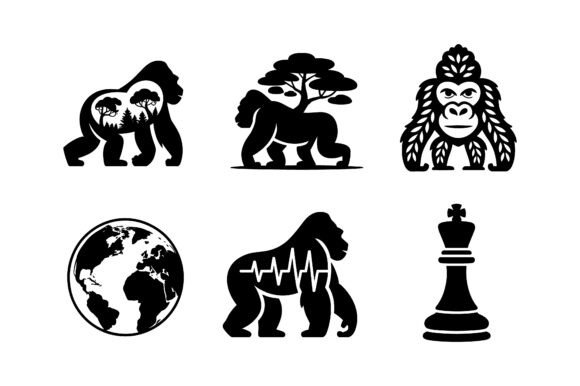
Each icon is crafted with a glyph style that emphasizes clarity and ease of recognition. This is particularly beneficial for educational content, where quick comprehension is essential. For instance, an icon representing a microscope can be used in a biology class to illustrate the tools of scientific research, while a gorilla silhouette can be employed in a presentation about endangered species.
Applications of Wildlife Conservation Research Icons
The versatility of the Wildlife Conservation Research Icon Set makes it suitable for a wide range of applications. One of the most common uses is in creating logos for wildlife foundations, conservation non-profits, or zoo research departments. A well-designed logo can instantly communicate the mission and values of an organization, making these icons an effective branding tool.
Additionally, the icons are excellent for scientific presentations and research papers. For example, a researcher studying primate genetics might use the icon set to illustrate key findings in a paper or a slide deck. The ability to incorporate visual elements into academic work enhances the overall impact and readability of the content.
Infographics are another area where these icons shine. They can be used to convey information about conservation strategies in a clear and engaging manner. The inclusion of a chess piece icon, for instance, can symbolize the strategic planning involved in wildlife conservation efforts. This kind of visual storytelling helps audiences grasp complex ideas more easily.
Use Cases for Educational Materials
Educators can benefit greatly from incorporating Wildlife Conservation Research Icons into their teaching materials. These icons can be used in environmental science programs at schools and universities to illustrate topics such as biodiversity, ecosystem dynamics, and genetic diversity. By using visual aids, teachers can make abstract concepts more relatable and easier to understand for students.
Moreover, the icons can be utilized in interactive learning activities. For instance, a classroom project on conservation strategies could involve students designing their own infographics using the icons provided. This hands-on approach not only reinforces learning but also encourages creativity and critical thinking.
Considerations for Using Wildlife Conservation Research Icons
While the Wildlife Conservation Research Icon Set offers numerous benefits, there are some considerations to keep in mind when using these icons. The first is the file format. The set comes as a single ZIP file containing an EPS file with all the silhouettes. It’s important to note that this is a digital product, and no other formats like SVG, PNG, or JPG are included. Users should ensure they have the necessary software to open and edit EPS files.
Another consideration is the intended use of the icons. While they are ideal for scientific, educational, and non-profit projects, users should review the licensing terms to ensure compliance. Understanding the rights associated with the icons is crucial, especially when using them in commercial contexts or for public-facing content.
Finally, it’s worth noting that the icons are best suited for projects that require a high level of detail and scalability. Their vector nature makes them perfect for print and digital media, but they may not be the best choice for simple, low-resolution applications. Users should assess their specific needs before deciding to incorporate these icons into their work.
Conclusion
The Wildlife Conservation Research Icon Set is a valuable resource for anyone involved in environmental science, education, or conservation efforts. Its combination of conceptual silhouettes and scientific imagery provides a versatile toolkit for visual communication. Whether used in educational materials, scientific presentations, or branding initiatives, these icons offer a way to convey complex ideas with clarity and impact.
By leveraging the power of visual storytelling, users can enhance their content and engage their audience more effectively. With its clean design, scalability, and symbolic depth, the Wildlife Conservation Research Icon Set stands out as a must-have tool for professionals and creators in the field of wildlife conservation and research.