Building in Flat Isometric Design: A Modern Approach to Visual Storytelling
In the ever-evolving world of design, visual communication has become a cornerstone of effective storytelling. One of the most compelling trends emerging in recent years is Building in Flat Isometric Design. This style combines the clarity of flat design with the depth and dimensionality of isometric projection, offering a fresh and versatile approach to visual representation. Whether you're a designer, marketer, or entrepreneur, understanding the value of this design trend can significantly enhance your creative toolkit.
What is Building in Flat Isometric Design?
Flat isometric design refers to a two-dimensional representation of three-dimensional objects using isometric projection. Unlike traditional 3D renderings, which often require complex software and high computational power, isometric designs offer a simplified yet visually engaging way to depict spatial relationships. When combined with the clean, minimal aesthetic of flat design, the result is a powerful visual language that is both modern and functional.
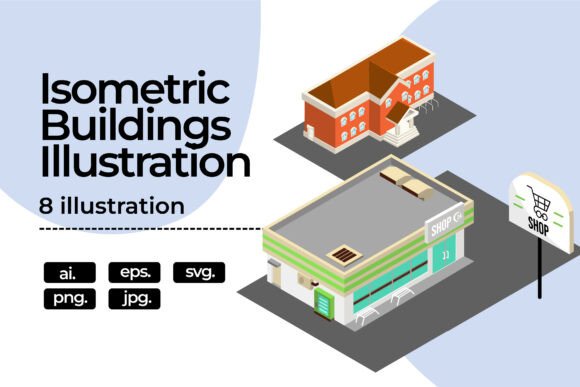
The Building in Flat Isometric Design package includes eight illustrations of isometric buildings, each rendered in a flat style. These designs are not just decorative—they serve as essential tools for visual communication across various industries. From website design to infographics and presentations, these illustrations provide a cohesive and professional look that aligns with contemporary design standards.
Why Is It Relevant Now?
As digital platforms continue to dominate how we consume information, the need for clear, concise, and visually appealing content has never been greater. Building in Flat Isometric Design addresses this need by offering a format that is both easy to understand and aesthetically pleasing. This style allows designers to convey complex ideas without overwhelming the viewer, making it ideal for data visualization, user interface (UI) design, and marketing materials.
Moreover, the shift toward remote work and digital collaboration has increased the demand for adaptable visual assets. The Building in Flat Isometric Design package meets this demand by providing multiple file formats—including EPS, AI, SVG, PNG, and JPG—ensuring compatibility across different design workflows. Whether you're working in Adobe Illustrator, Figma, or Canva, these files are ready to integrate seamlessly into your projects.
How Does It Fit Into Broader Trends?
The rise of Building in Flat Isometric Design aligns with several key trends shaping the creative and business landscapes today. First, there's the growing emphasis on minimalism and simplicity. In a world saturated with information, flat isometric design offers a refreshing alternative that prioritizes clarity over complexity. This trend is particularly evident in the tech industry, where user experience (UX) design plays a critical role in product success.
Second, the increasing importance of brand identity and visual consistency has made high-quality, editable design assets more valuable than ever. With the ability to change colors from RGB to CMYK, the Building in Flat Isometric Design package gives users the flexibility to match their brand’s color palette precisely. This level of customization ensures that the design remains relevant across different mediums and applications.
Finally, the trend toward remote collaboration and digital-first workflows has made access to versatile design resources a necessity. By providing files in multiple formats, this package supports teams working across different platforms and software ecosystems, streamlining the design process and reducing production time.
Practical Applications and Use Cases
The versatility of Building in Flat Isometric Design makes it suitable for a wide range of applications. For example, in website design, these illustrations can be used to create engaging landing pages, interactive maps, or animated elements that enhance user engagement. Their clean lines and structured layout make them ideal for conveying information quickly and effectively.
In presentations, isometric building designs can help visualize concepts such as urban planning, architectural layouts, or business growth strategies. By using these illustrations, presenters can communicate complex ideas in a way that is both intuitive and visually appealing. This is especially useful in industries like real estate, education, and government, where clear communication is essential.
Infographics also benefit greatly from Building in Flat Isometric Design. Whether it's a chart showing market trends or a diagram explaining a technical process, these illustrations add a layer of depth and professionalism that static images alone cannot achieve. Their scalability ensures that they remain sharp and clear at any size, making them perfect for both print and digital media.
Why Professionals Are Paying Attention
Designers and creatives are increasingly turning to Building in Flat Isometric Design because of its balance between aesthetics and functionality. Unlike more intricate 3D models, isometric designs are easier to create and modify, allowing for faster iteration and experimentation. This efficiency is crucial in fast-paced environments where time and resources are limited.
Additionally, the demand for editable and customizable assets has grown significantly. With the Building in Flat Isometric Design package, users have full control over color, structure, and composition. This level of flexibility is particularly valuable for businesses that need to maintain a consistent visual identity across multiple platforms and campaigns.
For entrepreneurs and marketers, these illustrations offer a cost-effective solution to elevate their branding and messaging. Instead of investing in custom illustrations or hiring freelance designers, they can access a ready-to-use library of high-quality assets that meet their specific needs. This not only saves time but also reduces overall project costs.
Looking Ahead: The Future of Flat Isometric Design
As technology continues to evolve, so too will the ways in which we use Building in Flat Isometric Design. Advances in AI and generative design tools may soon allow for even more dynamic and interactive isometric visuals. However, the core principles of clarity, simplicity, and adaptability will remain central to this design style.
For professionals in fields ranging from architecture to marketing, staying ahead of design trends is essential. By incorporating Building in Flat Isometric Design into their workflow, they can ensure that their visual content remains relevant, engaging, and impactful in an increasingly competitive landscape.