Process Steps Via Infographic: A Clear Path to Understanding Complex Ideas
In today's fast-paced world, the ability to quickly grasp and retain information is more valuable than ever. One effective tool that has gained popularity for its clarity and visual appeal is Process Steps Via Infographic. This method uses a series of visual elements to break down complex processes into digestible parts, making it easier for users to follow and understand.
For individuals researching, evaluating, or learning about a topic, Process Steps Via Infographic offers a structured approach that can simplify even the most intricate systems. Whether you're trying to understand a business workflow, a technical procedure, or a creative process, this visualization technique can be a powerful ally in your learning journey.
Why Someone Might Be Interested in Process Steps Via Infographic
People often turn to Process Steps Via Infographic when they need to make sense of something that feels overwhelming. This could be due to the complexity of the subject matter, the number of steps involved, or the need for a clear, step-by-step guide. The infographic format provides a visual roadmap, which can help users stay focused and avoid confusion.
Additionally, those who are visual learners may find this method particularly beneficial. Studies show that people often retain information better when it is presented visually. Process Steps Via Infographic leverages this principle by using minimalist icons, vibrant colors, and a clean layout to guide the viewer through each stage of a process.
Benefits of Using Process Steps Via Infographic
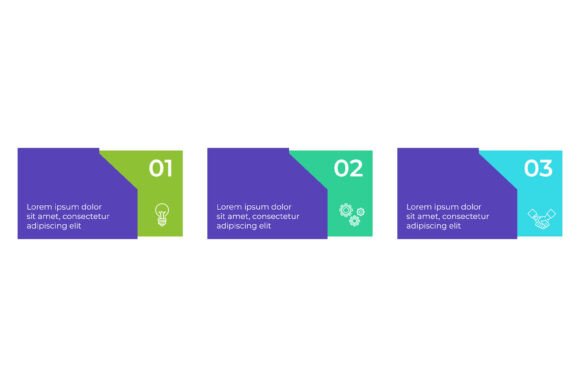
The primary advantage of Process Steps Via Infographic is its ability to simplify complex information. By breaking down a process into three distinct stages, it allows users to focus on one step at a time, reducing cognitive overload. This makes it ideal for educational settings, training materials, or project planning documents.
Another benefit is its universal appeal. Because it relies on visual cues rather than text-heavy explanations, it can transcend language barriers and be understood by a broader audience. This makes it an excellent tool for international teams, cross-functional projects, or public-facing content.
The use of vibrant hues and crisp design also enhances engagement. A well-crafted infographic can capture attention and maintain interest, making the learning experience more enjoyable and memorable.
Tradeoffs and Considerations
While Process Steps Via Infographic offers many advantages, it is not without its limitations. One potential drawback is that it may oversimplify a process, potentially omitting important details or nuances. For highly technical or detailed procedures, a purely visual approach might not be sufficient on its own.
Additionally, creating an effective infographic requires careful planning and design. Poorly executed visuals can lead to confusion rather than clarity. It’s essential to ensure that the layout is intuitive, the icons are easily recognizable, and the color scheme supports readability.
Users should also consider their audience. While some may prefer visual learning, others may rely more on textual explanations. In such cases, combining Process Steps Via Infographic with written instructions or interactive elements could provide a more comprehensive solution.
Situations Where It Is a Strong Fit
Process Steps Via Infographic excels in scenarios where clarity and brevity are key. For example, it is highly effective in onboarding new employees, explaining customer service workflows, or illustrating how to use a product. Its simplicity makes it ideal for quick reference guides, presentations, and digital content.
It is also useful in educational contexts, such as teaching students about scientific processes, historical events, or mathematical concepts. By presenting information in a structured and visual way, it helps learners connect the dots and see the bigger picture.
For businesses, Process Steps Via Infographic can streamline internal communication, improve team collaboration, and enhance client understanding. It is especially valuable when explaining multi-step procedures or complex systems to stakeholders who may not have a technical background.
Situations Where Alternatives May Be Worth Considering
In some cases, alternatives to Process Steps Via Infographic may be more appropriate. For instance, if the process involves a high degree of customization or requires detailed explanations, a textual or interactive format might be more suitable. Similarly, if the audience prefers a more hands-on approach, a video tutorial or simulation could offer greater depth and engagement.
For highly specialized fields, such as engineering or medicine, where precision is critical, relying solely on an infographic may not be enough. In these situations, a combination of visual and textual resources is often the best approach.
Practical Decision-Making Insights
When deciding whether Process Steps Via Infographic is the right choice, consider the following factors: the complexity of the process, the needs of your audience, and the goals of your communication. If the goal is to provide a quick, clear overview, an infographic is likely a strong option.
However, if the process requires detailed explanation, multiple variations, or real-time interaction, other formats may be more effective. It’s also important to test the infographic with a sample audience to ensure that it communicates the intended message clearly and effectively.
Ultimately, Process Steps Via Infographic is a valuable tool for anyone looking to simplify and visualize a process. By offering a clear, engaging, and accessible way to present information, it can help users navigate complex systems with confidence and ease. Whether you’re a student, a professional, or a business owner, this approach can be a powerful addition to your communication strategy.